How to Do Kintsugi Without Real Gold: Brass, Silver, Copper & Bronze
This video demonstrates our complete Kintsugi Gold Effect process, from controlled breakage and bonding through filling, brass powder application and completion.
Our Gold Effect uses brass powder to create an appearance closely comparable to genuine gold. It is simpler to implement than the real-gold process and uses more accessible tools and materials.
How to Do Kintsugi Without Real Gold
If you are interested in how to do Kintsugi without real gold, fine brass powder can provide an accessible alternative for creating the appearance of a gold repair. Instead of using expensive genuine gold powder, this modern Kintsugi method uses brass powder to highlight the repaired seams.
This approach can be especially useful for people learning Kintsugi for beginners without gold. It allows you to practice the important stages of bonding, filling, shaping, smoothing and metallic powder application before deciding whether you want to work with genuine gold.
Brass powder is one practical Kintsugi gold powder alternative. It produces a rich metallic gold appearance while being more accessible and less costly than genuine gold.
The same modern Kintsugi method is not limited to a gold appearance. Other metallic powders can be used with this process, including silver, copper and bronze metal powders. This allows the visible repair lines to complement the color, glaze and character of the ceramic object rather than always appearing gold.
Materials and Tools Used
The following materials and tools were used to create this Kintsugi Gold Effect vessel:
- Tile cutter (used to create controlled breakage)
- PC-Clear Epoxy (bonding adhesive)
- PC-11 Epoxy (filler)
- Red Mudtools Polymer Rib (for shaping and smoothing the filler)
- Pottery Pin Tool (for detailed filler application)
- Easy Leaf Extra Brilliant Pale Gold #5 Brass Powder (used in this demonstration to create the gold effect)
- 91% Isopropyl Alcohol (surface cleaning)
Choosing a Metallic Powder for Kintsugi
While this demonstration uses Easy Leaf Extra Brilliant Pale Gold #5 Brass Powder, brass is only one of the metallic powder options that can be used with this method.
Easy Leaf offers metallic powders in brass, silver, copper and bronze, along with a variety of shades and finishes. These different metals can be used with the same general Kintsugi technique demonstrated in the video, allowing artists and restorers to choose a metallic repair that complements the ceramic object.
Brass is particularly useful when the goal is a traditional-looking gold effect because its natural metallic color can closely resemble gold. Easy Leaf brass powders are available in different gold-like shades, making it possible to select a tone that works well with the glaze and color of the vessel.
Silver, copper and bronze powders provide very different visual possibilities. Silver can create a cooler, contemporary repair line, copper provides a warm reddish metallic appearance, and bronze produces a deeper and often more subdued metallic tone.
The choice of metal does not need to imitate gold. With this modern Kintsugi method, the metallic repair itself can become an intentional part of the design. A silver, copper or bronze Kintsugi repair may complement some ceramic surfaces better than a traditional gold-colored seam.
For someone searching for a gold powder substitute for Kintsugi, brass is particularly useful because of its gold-like appearance. For those who prefer another metallic color, Easy Leaf silver, copper and bronze powders provide additional alternatives using the same basic metallic-powder application method demonstrated here.
Safety
If your hands may come into contact with uncured epoxy, wear nitrile gloves and work in a well-ventilated area. Wear eye protection when appropriate and always follow the manufacturer's safety instructions for each product.
Gold Effect Compared with Real-Gold Kintsugi
While visually similar to traditional gold Kintsugi, this modern approach is faster to complete, requires fewer specialized materials, and is well suited for artists, hobbyists, beginners and restoration professionals.
Traditional Kintsugi uses genuine metal powder applied with traditional lacquer materials. Our Gold Effect process uses brass powder with modern bonding and filling materials to create a comparable gold appearance using a simpler and more accessible process.
For someone who wants the visual character of gold Kintsugi without using real gold, brass powder offers an effective alternative. It also provides a practical way to learn the process before moving to considerably more expensive genuine gold materials.
The same approach can also be adapted to silver, copper and bronze metallic powders when a gold appearance is not desired.
See how we implement our 23.5K Gold Kintsugi process:
23.5K Gold Kintsugi Process
Kintsugi Without Real Gold: Common Questions
Can you do Kintsugi without real gold?
Yes. Genuine gold is not required to create a visible Kintsugi-style repair. Brass and other metallic powders can be used to create decorative repair lines without using real gold. The process shown on this page uses brass powder to produce a gold-effect finish.
What can I use instead of gold powder for Kintsugi?
Brass powder is one useful alternative to genuine gold powder and can provide a rich gold-like appearance. Silver, copper and bronze metal powders can also be used with this method when a different metallic color is desired.
Can silver, copper or bronze be used for Kintsugi?
Yes. The metallic-powder method demonstrated here can also be used with silver, copper and bronze powders. Each metal creates a different visual effect, allowing the repair lines to complement the ceramic piece rather than being limited to a traditional gold appearance.
Does Easy Leaf offer other metallic powders for Kintsugi?
Yes. In addition to the Easy Leaf brass powder used for the Gold Effect demonstrated here, Easy Leaf offers other metallic powders including silver, copper and bronze. These provide additional color and design choices while using the same general modern Kintsugi method.
Is brass powder Kintsugi suitable for beginners?
Yes. A brass-powder Gold Effect process can be a practical way for beginners to learn bonding, filling, shaping, smoothing and metallic finishing without initially investing in genuine gold.
How do you do Kintsugi without real gold?
In the process demonstrated here, the ceramic pieces are bonded, the repair seams are filled and shaped, and brass powder is applied to produce the visible gold-effect lines. The same basic method can also be used with other metallic powders such as silver, copper and bronze.
Does brass powder look like real gold?
High-quality brass powders are available in several gold-like shades and can create an appearance closely comparable to genuine gold. The final appearance depends on the particular metallic powder, the ceramic surface and the method of application.
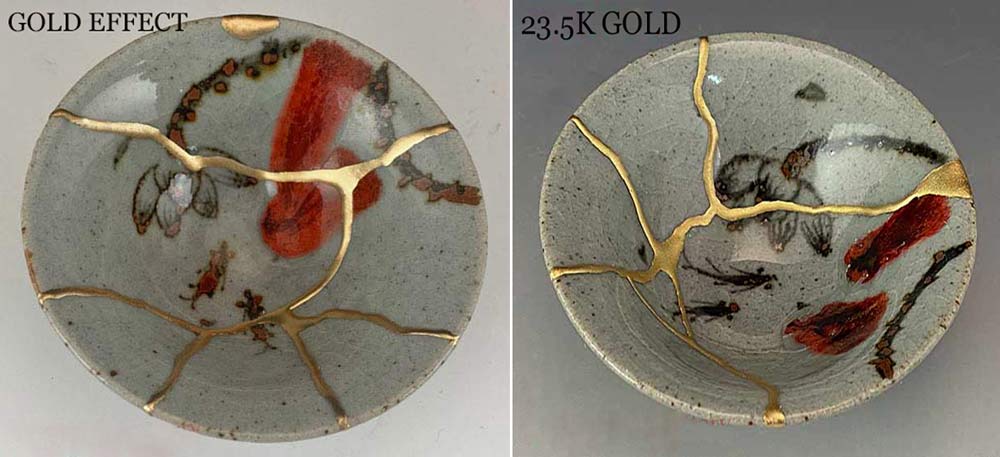
Brass and gold kintsugi side by side
Which metallic powder should I use for Kintsugi?
The choice depends on the appearance you want to achieve. Brass provides a gold-like effect, silver creates a cooler metallic line, copper adds a warm reddish tone, and bronze creates a deeper metallic appearance. The metal can be selected to complement the glaze, color and character of the ceramic object.
Related Kintsugi Lessons and Examples
Watch this Kintsugi Gold Effect process video on YouTube: https://youtu.be/wtj7vSkH4eQ