|
June 2, 2026 Morty Bachar
People often come to Kintsugi believing they are commissioning an object. A repaired bowl. A restored vase. A vessel meant as a gift. What they later tell us, again and again, is that they received something far larger than expected. They received recognition.
Not recognition in a public or celebratory sense, but the deeply human experience of having pain, survival, and transformation acknowledged without explanation or judgment. Illness. Divorce. Trauma. Addiction. Grief. Reconciliation. Endurance. Kintsugi gives these experiences a physical form when words are insufficient or unavailable.
These responses cross every boundary. Veterans carrying visible and invisible wounds. People of great means and those of modest resources. Survivors rebuilding their lives and leaders entrusted with immense responsibility. The same language of fracture and repair resonates with families, faith communities, corporations, heads of state, world leaders, and even institutions such as the White House. Brokenness, it turns out, is a universal condition.
Why Kintsugi Matters
Kintsugi matters because it challenges one of the most deeply ingrained assumptions of modern life: that damage must be hidden, replaced, or discarded.
In much of the contemporary Western world, value is tied to flawlessness. Objects are meant to be new, bodies unscarred, lives uninterrupted. When something breaks, it is often treated as failure rather than as part of a story. Kintsugi quietly resists that narrative. It proposes something radical and humane: that repair can be more meaningful than replacement, and that history can add value rather than diminish it.
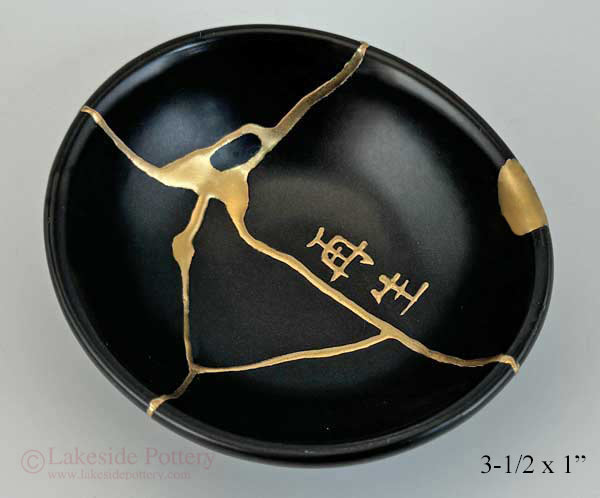
The gold does not pretend the break never happened. It insists that the break belongs to the object's story. This is why Kintsugi resonates so deeply in a time marked by personal upheaval, collective uncertainty, and a growing awareness of emotional and mental health. It offers a way to live with what happened instead of struggling to erase it.
An Ancient Japanese Metaphor, Reawakened
Kintsugi originated in Japan centuries ago as both a practical repair technique and a philosophical stance. Rooted in values of respect, impermanence, and acceptance, it reflected a worldview in which wear and fracture were signs of life rather than defects.
What is remarkable is how powerfully this metaphor has been reawakened in the Western world.
As people search for meaning beyond perfection, productivity, and consumption, Kintsugi has found new ground. Artists, collectors, therapists, spiritual leaders, educators, and everyday individuals have recognized something profoundly relevant in this ancient practice. Without losing its cultural roots, Kintsugi has become a shared visual language for resilience and dignity.
This is not imitation for novelty's sake, nor detachment from origin. It is recognition. The metaphor endures because it speaks to something timeless: the human need to be seen as whole, even when marked by experience.
The Object as Witness
What we hear most often is that a Kintsugi piece becomes a quiet witness to someone's life. It sits on a shelf or table, never explaining itself, yet constantly reminding its owner of something they survived.
|
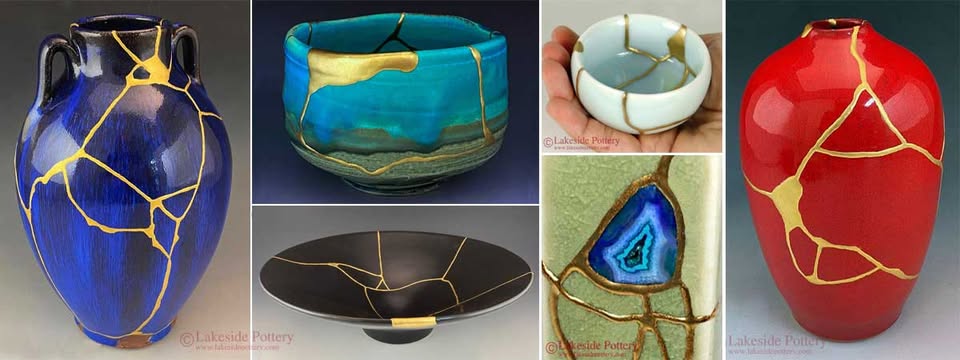
For those recovering from illness, the gold seams reflect strength rather than fragility. For those living with grief or loss, a missing shard or open void becomes an honest acknowledgment of absence. For those shaped by years of hypervigilance, control, or self-repair, the joined fractures say something simple and radical: you do not have to be seamless to be whole.
|
|
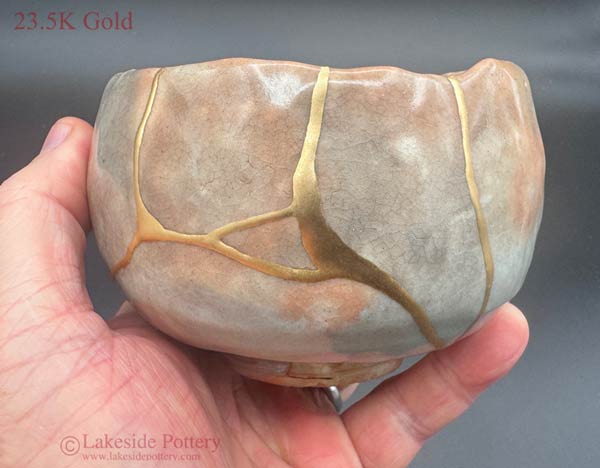 |
It simply exists, whole and altered.
Unlike words, objects remain. They sit quietly in our homes for years, becoming part of daily life. Every glance is another conversation with memory. A Kintsugi vessel does not ask to be noticed, yet over time it often becomes one of the most meaningful objects a person owns.
Gifts That Speak When Words Cannot
Many Kintsugi pieces are given at moments when language fails. A parent to a child facing surgery. A partner to a spouse after reconciliation. A friend to another who survived cancer. A family member marking a turning point that has no ceremony and no script.
People often say the same thing in different ways: this was the only gift that felt true.
Recipients describe holding the piece, feeling its weight and balance, tracing the gold unconsciously with their fingers. They do not see damage. They see endurance made visible.
Repair as an Act of Respect
There is a reason this work must be slow. People sense it.
They recognize when something has been rushed or treated as decorative rather than meaningful. When fragments are carefully aligned, when restraint is chosen over excess, when gold is applied with intention, people feel that care instinctively. They understand that their story was handled with patience.
Care cannot be rushed because meaning cannot be rushed. Every decision becomes part of the respect shown to the person behind the object.
This respect matters whether the piece belongs to a veteran, a survivor, a family heirloom, a corporate commission, or a diplomatic gift. Human experience levels everything.
Kintsugi as a Language Between Nations
Kintsugi can carry meaning beyond the individual. Its metaphor of fracture, repair, and renewed connection can speak to relationships between peoples and nations as well.
|
We experienced this firsthand when Lakeside Pottery Studio was entrusted with creating Kintsugi gifts from the White House for Japanese prime ministers. In that diplomatic setting, Kintsugi became more than a beautiful object. It carried a message between two countries with a complicated shared history: what has been broken cannot be erased, but it can be acknowledged, repaired, and carried forward with respect.
Perhaps that is one reason Kintsugi feels so relevant in a fractured world. The same principle that applies to a person or family can apply on a much larger scale. Repair does not require pretending the fracture never occurred. It begins by recognizing it.
|
|
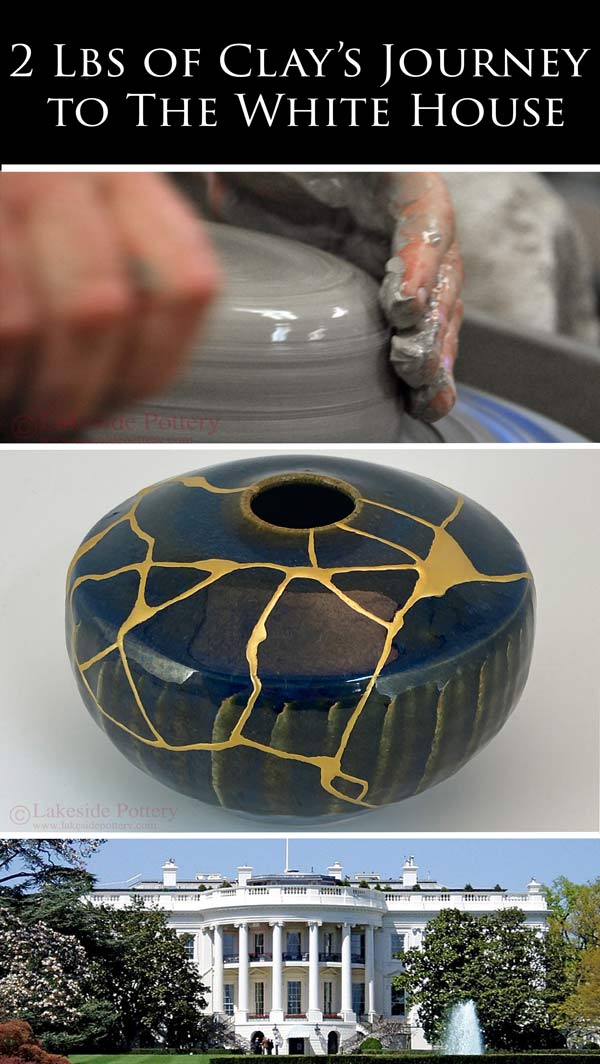 White House Presidential Gift to the Prime Minister of Japan, 2024 White House Presidential Gift to the Prime Minister of Japan, 2024
|
Kintsugi as Spiritual Teaching
Religious leaders from different faith traditions have embraced Kintsugi as a teaching tool. Placed on stands, altars, or tables, the vessel becomes a visual metaphor for spiritual repair.
The gold-filled fractures speak of grace that does not erase suffering but enters it. The cracks are not hidden from God. They are where meaning and mercy appear. Faith, in this context, becomes less about perfection and more about repair.
Kintsugi in Therapeutic Spaces
Beyond places of worship, Kintsugi has also found a meaningful place in psychotherapy practices, trauma counseling, and somatic healing.
For clients carrying trauma, chronic illness, or long histories of survival, the gold seams validate harm without defining identity. Scars become evidence of adaptation. Healing becomes integration rather than erasure. The message resonates across professions, cultures, and backgrounds: identity is not compromised by damage.
A Personal Reflection
As I approach seventy years of age, this practice has taken on a meaning I could not have anticipated when I first began. Working with broken objects day after day has quietly reshaped how I understand time, value, and legacy. Kintsugi has slowed me down in a world that rewards speed and reminded me that patience is not inefficiency but care made visible. At this stage of life, the work no longer feels like a craft alone. It feels like a conversation with impermanence, an acceptance of change, and a daily reaffirmation that presence and attention leave a mark long after hands can no longer work the gold.
| Each piece also has a meaningful job to do, and it is a privilege for me to be entrusted with that responsibility. Before I begin a project, I want to hear the story. I want to understand who will live with the vessel and what it represents. As I work, I think about the person who will receive it, about what they may have endured, and about the quiet strength it takes to continue forward. The labor is physical, but it is not only physical. Attention, intention, and care become part of the work itself.
|
|
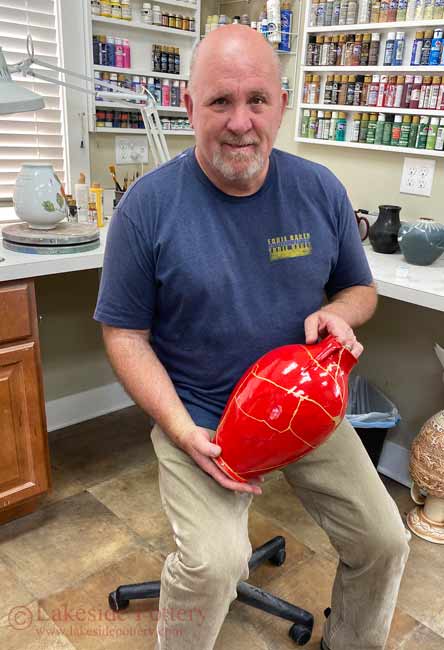 |
When a piece is finally packed and shipped, it no longer feels like an object leaving the studio. It feels like something entrusted to carry meaning onward, and in that sense, a small part of me travels with it, offered with respect, in the hope that it may quietly support its own work of healing.
More Beautiful Than Before
People often say their piece is more beautiful than before it broke. Not prettier. Not flawless. More honest.
The restored vessel carries its full history. It does not pretend to be untouched. It stands as proof that vulnerability does not negate worth and that care can transform what pain alone cannot.
People do not come to Kintsugi seeking perfection. They come because perfection has already failed them.
What These Stories Have Taught Us
After hundreds of letters, calls, and quiet conversations spanning every walk of life, a pattern emerges.
People are not asking to erase what happened. They are asking to live with it differently.
Kintsugi offers a way to do that without explanation, diagnosis, or justification. It allows an object to say what people often cannot yet say themselves: I broke. I was held. I am still here.
That truth has traveled far from its Japanese origins not because it was reinvented, but because it was needed. In a fractured world searching for meaning, Kintsugi reminds us that repair is not a return to what was, but an honest step forward.
|