Page Updated on:
2/6/2026
|
The Last Human Hand | Why Art May Be Learned by Machines, but Restoration Still Belongs to Us
I work in art restoration. Watching AI enter the creative fields has clarified for me where machines stop and human responsibility begins.
|
|
1. The Acceleration of Artificial Creativity
Artificial intelligence is entering the creative fields at an extraordinary pace. Each week seems to bring a new tool that can generate images, write scripts, mimic voices, or simulate artistic styles with startling ease. As someone who works daily with broken objects and irreplaceable history, I have been thinking less about what AI can create, and more about where it inevitably stops. This reflection comes from the workbench, not from theory.
Artificial intelligence has entered the arts with breathtaking speed. In film, AI can generate scripts, de-age actors, fabricate voices, and edit footage in minutes. In painting and graphic design, algorithms now produce convincing images in the style of almost any artist, living or dead. Sculptural forms can be modeled digitally, optimized, and fabricated by machines with astonishing precision. What once required years of training can now be approximated in seconds by a prompt and a processor.
2. Imitation, Efficiency, and the Uneasy Truth About Art
This shift is unsettling, especially for those who believe art is not just output, but experience. Art has long been understood as an expression of perception, struggle, intention, and time. AI excels at imitation. It learns patterns, absorbs styles, and recombines them with superhuman efficiency. In doing so, it exposes an uncomfortable truth. Much of what we call artistry in modern production has already been reduced to repeatable formulas. If something can be standardized, optimized, and predicted, a machine will eventually do it better, faster, and cheaper.
3. The Boundary AI Has Not Crossed
Yet there is a crucial boundary AI has not crossed and may never fully cross. That boundary is three-dimensional art restoration.
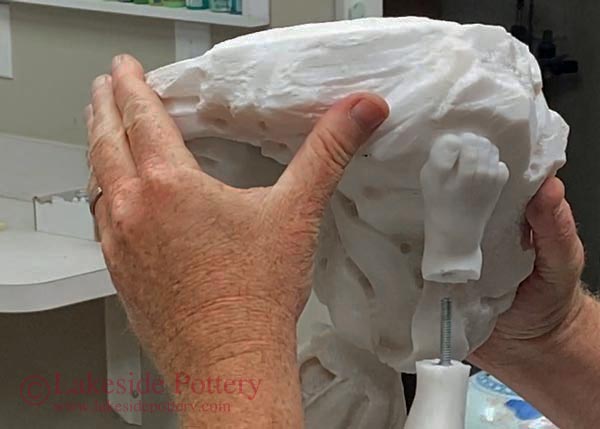
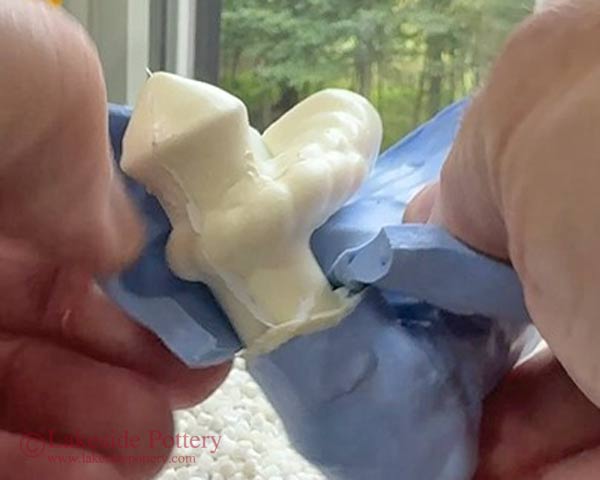
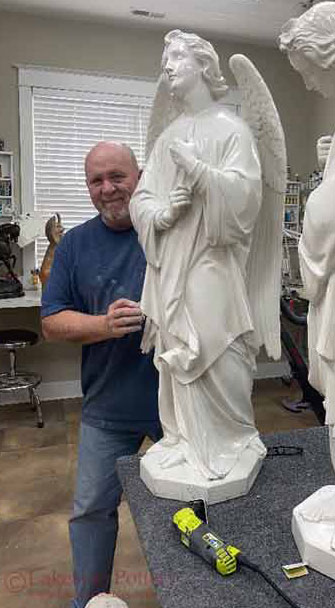
Ancient marble statue work in progress
Restoration is not about generating something new. It is about entering a silent dialogue with something old, broken, and often irreplaceable. A shattered vessel, a chipped sculpture, or a fractured figurine carries history, intention, material memory, and emotional weight. No two breaks are the same. No two surfaces age identically. The restorer is not inventing freely, but listening, interpreting, and responding to what already exists.
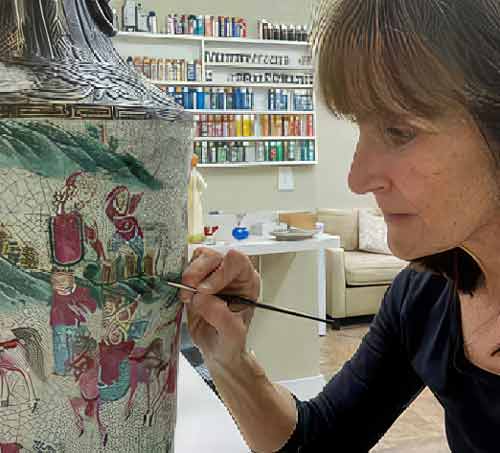
Unlike AI-generated art, restoration cannot rely on statistical averages or visual plausibility alone. It demands tactile intelligence. How pressure feels when sanding porcelain versus stoneware. How light behaves across a repaired glaze. How pigments shift once sealed. How structural stresses travel through a mended object. These judgments are made through hands, eyes, patience, and long-earned intuition. They are not abstract problems. They are physical negotiations with matter.
4. Embodied Judgment and Irreversible Risk
Three-dimensional restoration unfolds in real time, not in simulation. A restorer constantly adjusts based on subtle feedback that cannot be fully measured or predicted. A fraction of misalignment changes how weight is carried. A slight shift in sheen alters how a form is perceived in space. The object itself responds during the process, sometimes resisting, sometimes revealing hidden weaknesses.
These moments demand judgment that is situational rather than procedural. Human thinking excels here because it is embodied, adaptive, and aware of consequence. The restorer is accountable not only to the result, but to the risk taken at every step. Once material is removed or altered, there is no undo. That irreversibility forces a level of attentiveness and care no automated system is designed to carry.
5. The Ethics of Disappearing and the Transfer of Care
More importantly, restoration is ethical work. The goal is not to impose the restorer's voice, but to disappear. To honor the original maker. To preserve authenticity. To respect the object's history, including its damage. Deciding what to conceal, what to reveal, and what to leave untouched is a human judgment rooted in humility and restraint. It is contextual, emotional, and often uncomfortable. Machines are not built for that kind of responsibility.
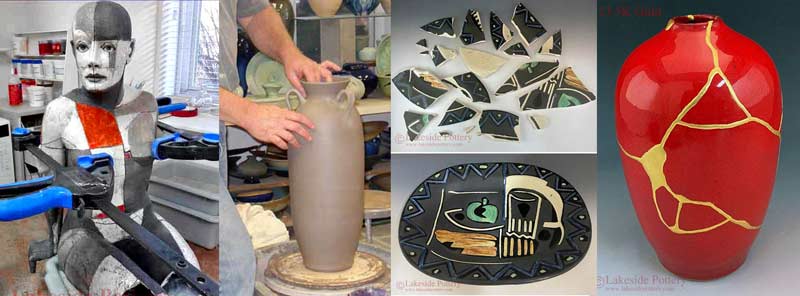
There is also something less measurable that enters the work. Many objects arrive already carrying intention. A vessel made to comfort. A figure shaped to protect. A bowl used daily by a family and broken in a moment of loss. When a restorer engages with such an object, they do not interact with material alone. Thought, care, and intention pass through the hands and into the work.
The act of repair becomes participatory rather than technical. Something is transferred that cannot be scanned or quantified. Call it connection, presence, or human continuity. Whatever the word, it is felt by the person who receives the restored object. They often describe it not as fixed, but as healed.
6. Sacred Objects and Stewardship
This understanding is explicit in some Buddhist conservation traditions. Sacred statues are treated not as neutral objects, but as living presences once consecrated through ritual. Before restoration begins, caretakers or monks may speak with the restorer about intention and responsibility. Because the statue is prayed to by the sangha, the community, the work must be carried out with mindfulness and respect.
Restoration in this context is not repair alone. It is stewardship. It recognizes that an object can hold meaning that extends beyond its physical form.
7. Where AI Can Assist and Where It Must Stop
AI may assist restoration in limited ways through documentation, visualization, or structural analysis. But the final execution - structural decisions, physical alignment, surface integration, and risk management - remains profoundly human. When a restorer matches a surface by layering color slowly and deliberately, or aligns fragments by feel rather than measurement, they are doing something no dataset can replicate. They are responding to singularity, not pattern.
8. The Quiet Irony of the Future
There is a quiet irony here. As AI floods the world with infinite images and synthetic creativity, the value of genuine human work may concentrate where shortcuts are impossible. Restoration sits squarely in that space. It is slow. It resists automation. It is intolerant of approximation. It depends not only on skill, but on care.
Perhaps this is the future balance. Let machines generate endlessly and remix tirelessly. Let humans remain the custodians of meaning, memory, and touch. Art may increasingly be made by algorithms, but the act of saving art, of repairing what time and accident have broken, still requires a human hand, a human eye, and a human conscience.
And maybe that is reassuring. In a world where creation is becoming effortless, preservation still asks something of us.
FAQ
Why can't AI fully replace 3-D art repair and restoration?
Because 3-D repair and restoration require embodied, tactile judgment in real materialsalignment by feel, surface and sheen control under changing light, and constant adaptation to hidden weaknesses. The work is irreversible, and decisions must be accountable to the object's structure, history, and meaning.
How is 3-D restoration different from AI-generated art or digital design?
AI-generated art optimizes plausibility by recombining patterns. 3-D restoration responds to a singular, existing object with unique breaks, aging, and material behavior. The restorer must listen to what is there, not invent freely, and the result must function physically, not just look convincing.
What role does ethics play in professional restoration?
Ethics guide what to conceal, what to reveal, and what to leave untouched. Restoration aims to honor the original maker and preserve authenticity rather than impose the restorer's style. These choices are contextual and human, rooted in humility, restraint, and responsibility.
Can AI assist restoration at all?
Yes. AI may help with documentation, visualization, cataloging, and limited analysis. But the final execution structural decisions, physical alignment, surface integration, and risk managementremains profoundly human because it depends on touch, judgment, and irreversible choices.
Why does the restored result often feel "healed" rather than simply "fixed"?
Because meaningful objects often carry memory and emotional weight. The restoration process involves care, attention, and restraint, and recipients frequently experience the outcome as continuity restored not just damage removed.
|
|